
The COVID era exposed and significantly accelerated a long-term institutional timidity that, combined with weak legislative processes, has increased the appeal of centralized, personality-driven leadership—an outcome that carries both political risks and governance costs.
That drift toward institutional timidity has quietly reshaped government, corporations, and other pillars of public life. That drift became a flood during the COVID crisis, when emergency measures overwhelmed ordinary norms and centralized authority expanded into nearly every corner of daily life. In the name of protection, government actions displaced routine checks and balances, producing what many experienced as the largest concentration of power in our nation’s history. Much of that concentration of power tilted heavily towards socialism.
A Crisis of Capability: Governing in the Shadow of COVID:-
A defining aspect of COVID- and post-COVID-era government is the lingering doubt that government is either effective, efficient, reliable, or capable to any meaningful degree. This doubt, especially among the maker class in general and conservatives in particular, has polarized the political process to the point that government appears to be paralyzed and incapable of governing. They are correct. Regular Order in government has become an oxymoron.
President Trump might be the best leader we’ve had in decades, but his results can’t be seen as anything but uneven at best. His reliance on Executive Orders vs. Congressional action is a shrill siren that should unnerve everyone who desires America to return to prosperity. Couple this failure with a politically inclined judiciary and the realization that Trump will be gone in three years; how could things look much worse?
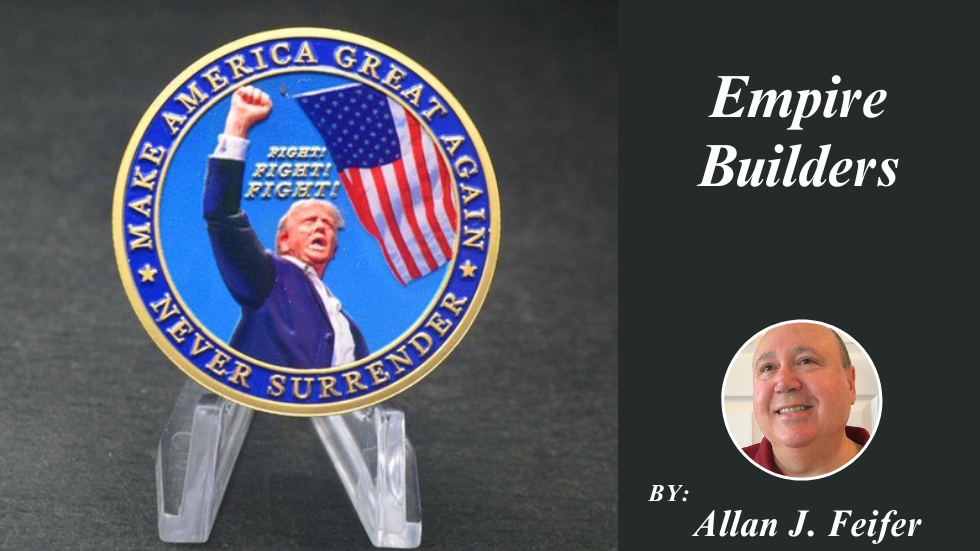
MAGA may one day be seen as an addiction equal to TDS. It’s impossible to argue with the statement “Make America Great Again.” That statement and its acceptance by millions upon millions of Americans resonated and still does. How it’s being translated into action is another story. One could absolutely agree with, support, and revere MAGA and still not be happy with how it has been materialized in real life.
I watched Marjorie Taylor Greene on 60 Minutes the other night, and what struck me was her belief that America First is not compatible with MAGA as it has been rolled out. Now, I’m no fan of MTG, but what I took away was her dissatisfaction with how MAGA has morphed, regardless of what all of us initially thought MAGA meant. There is some truth in that.
MAGA and Trump’s ego are inseparable. The MAGA movement illustrates this tension. Its slogan—Make America Great Again—resonated widely because it captured a yearning for competence and renewal. But slogans are not policies, and the translation from rhetoric to governance has been uneven. Supporters fall into two broad camps: those who treat Trump’s words as sacrosanct, and those who share the movement’s goals but worry about how they are pursued. That internal division weakens the movement’s ability to build durable institutions.
When we talk about a divided country, nowhere is that division more stark at the moment than in the conservative movement. As a regular contributor to American Thinker, I have great confidence that fellow conservatives are anything but wallflowers. We are just as vocal as the other side and just as destructive to our own cause as we are ready, willing, and able to destroy anyone who sees an issue differently than we do ourselves.
I had a reader say to me (edited):
“Putin and Xi are dictators. The Russian and Red Chinese governments are not as stable as ours; they rely on the loyalty of corrupt individuals who all want to get rich. Corruption is how they all get rich, because they don’t have any opposition, and it is a lot easier to deal with a strongman in power who basically runs a mafia organization as a government.
That’s what Russia and Red China are.
For Trump, that’s how a successful business model works. He doesn’t think in a democratic fashion because corporations aren’t that way. It’s top-down management, central control, and everyone works to make the most money. How do you work your way up? Doing well helps, yes, but also who you know, interpersonal relationships, and corruption filters into all that. Siphoning off money happens, and you know who to pay off, you advance up the ladder. You know how to make someone happy by offering payoffs, and that person can promote you into a better position. Nepotism is placing family members in key company positions for family loyalty.”
While not in lockstep with the above statement, I have to agree that President Trump, along with Xi and Putin, are traditional Empire Builders whose vision, policies, personalities, and demand for fealty are just as ever-present as other Empire Builders. For many reasons, this approach went out of style and is foreign to several generations of Americans who have never been exposed to it.
Empire-building plays with fire in a democratic republic. As much as we might seem to need it, concentrated authority erodes norms, as we have seen, sidelines deliberative institutions, and invites corruption or favoritism. Even when a strong leader achieves short-term successes, the long-term costs to institutional health and civic trust present a risk. In America, many within the governing party and across the political spectrum instinctively seek limits on unilateral power precisely because they recognize these risks. In our constitutional republic, Donald J. Trump will not be able to overcome all the checks and balances arrayed against him, no matter how noble or right the cause, or as much as how many want him to succeed.
So where does that leave us? The appeal of decisive leadership is real and understandable. Yet the remedy cannot be to trade one set of institutional failures for another form of concentrated control. The challenge is to restore competence and confidence within institutions while preserving the checks, processes, and pluralism that protect democratic governance. That requires greater transparency in accountability, better legislative solutions, and a renewed commitment to the norms that make self-government possible.
Conclusion:-
If conservatives and reformers want effective leadership without the perils of empire building, they must pursue reforms that strengthen institutions rather than bypass them. That means translating popular energy into durable policy, rebuilding public trust through transparency and results, and insisting that bold action be anchored in law and process. Only by doing so can the country have leaders who are both decisive and constrained—leaders who deliver meaningful progress without sacrificing the institutions that sustain it. This requires a conservative-driven Congress to do its job of both oversight and supporting Trump’s aims in a lawful and enduring manner; this they have been derelict in doing.
God Bless America!
 Allan J. Feifer—Patriot
Author, Businessman, Thinker, and Strategist. Read more about Allan, his background, and his ideas to create a better tomorrow at www.1plus1equals2.com. Read additional great writers here.
You may also enjoy these Articles, published on National Platforms

I disagree in some of your comments. Your heavy on Trump when you should be heavy on congress and the democrats. They are wasting away our country. MTG – compare at her net worth against a timeline. I wonder how much she made on 60 Minutes? I like her but I don’t trust anyone in congress, especially those that increase their wealth in disgusting amounts while there. And I don’t trust 60 Minutes after what they did to our governor and Kamala Harris. Our congress is worthless, and our dollar will be worthless soon if the states don’t convene and put term limits or rules in place. A great rule would be- if you can’t produce a balanced budget, you can’t be re-elected. Who is going to do something like that? They are all sitting around waiting for Trump to finish his term. He is not the problem, congress is. I want to know how much MTG made while there. Maybe the amount it is just a rumor.