
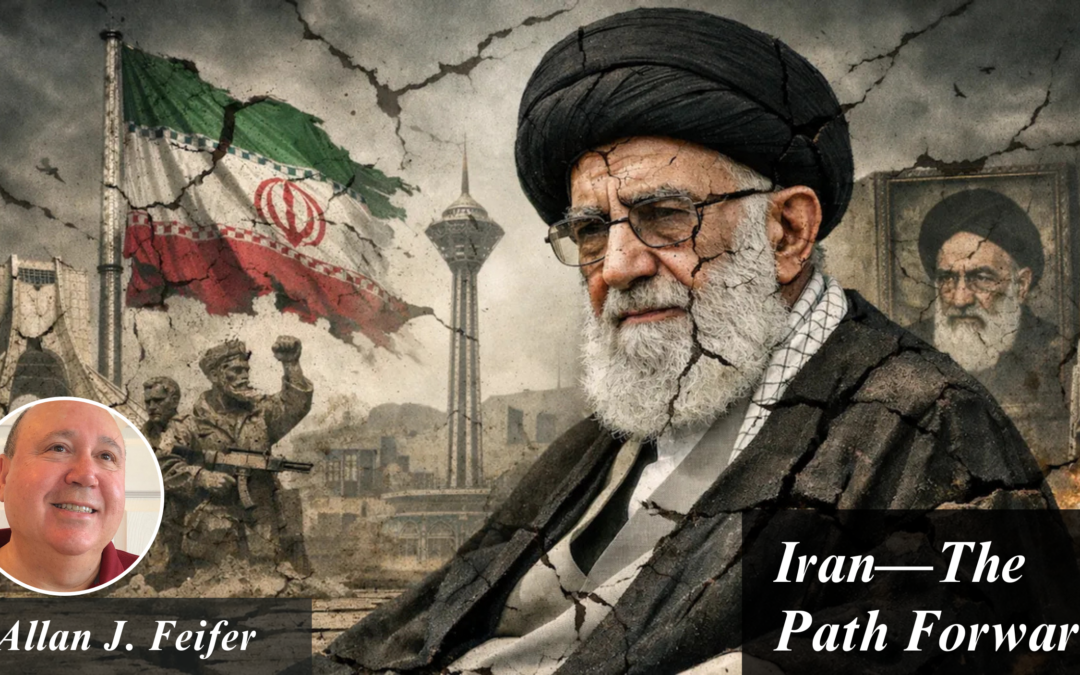
Preface: At the time of this writing, it appears as if government forces are regaining control in most areas through a brutal crackdown costing thousands of Iranian lives. Economic, social, and political factors remain unchanged, with Iran one of the world’s top pariah nations. The factors that began this revolution continue, mitigating towards an eventual collapse of the theocracy and a massive restructuring of Iran’s influence in the Middle East sooner, rather than later. Meanwhile, U.S. forces are being surged into the area as we speak.
No matter what side of the aisle you’re on, Trump loyalist or someone who thinks Trump’s the devil, we’re on the cusp of an incredible opportunity not seen since the end of WWII. No one can say whether Iran is about to fall. History suggests that Iran’s internal security forces will brutally uphold the regime regardless of cost in lives or treasure. There have been several uprisings this century. Since 2000: the 2009 Green Movement, the 2017–2018 economic protests, the November 2019 fuel protests, the September 2022 “Woman, Life, Freedom” protests, and the current December 2025–January 2026 unrest. Casualties range from dozens to hundreds in earlier waves, with thousands killed and tens of thousands arrested in the most recent uprisings.
The Million-Dollar Question:
is there a way the forces of good (that’s us) can help the Iranian people throw out the theocrats and begin the messy process of creating a constitutional democracy that once and for all eliminates the greatest threat to safety and security in the Middle East, and not be drawn into another debacle? Whenever I want to test a theory, I imagine an invisible button that I could push to answer a question. In this case, if I press the button and could remove the Mullahs, would I? I think the reasonable answer is “yes.” With that in mind, it is evident to me that we should endeavor to craft a strategy to that end.
Here’s where we are:
Iran is weaker now than at anytime since the revolution:
- According to the Hudson Institute, “Analysts argue that ‘the Islamic Republic is dying… it will not emerge from 2026 with its authority, cohesion, or capacity preserved”and that collapse or severe decline is inevitable, making Iran weaker now than at any time since the 1979 revolution.
- “Big Think”—reports describe 2025 as Iran’s “worst-ever annus horribilis“, citing destroyed nuclear facilities, assassinated commanders, currency collapse, and loss of key regional allies, leaving the regime more vulnerable than at any time in decades.
- Al Jazeera—”A timeline of crises highlights that the current protests and economic collapse are among the most destabilizing events Iran has faced since 1979.”
Restraining us is polling and talking heads spreading a message that America is tired of “foreign adventurism” and wants us to take care of the myriad problems we face at home, leaving the rest of the world to its own devices. We’ve gone through periods of isolationism before. American isolationism isn’t a single episode — it’s a recurring strategic posture that surfaces whenever the United States feels overextended, disillusioned with global commitments, or internally preoccupied.
Prior periods include:
- 1780s through 1820—avoid entangling alliances, especially with Europe. Washington’s farewell address warned against involvement in European wars.
- 1815 through the start of the Civil War—again, fear of foreign entanglements and the national idea embodied in the Monroe Doctrine of 1823.
- 1870-1890s—what has been termed national exhaustion and a continuing belief that distance would protect us.
- 1919-1939—the euphoria period after WWI and a “never again” belief that staying out of foreign politics would isolate us from world events. Congress passes the Neutrality Act.
- 1975-1980s—Vietnam trauma sees the American people shell-shocked and believe that we were safe behind our bastions protected by the Atlantic and Pacific oceans.
- 1991-2001—a belief that we had defeated the Soviet Union and that major threats to the world were over. Americans demanded a peace dividend.
- 2008-present—Iraq and Afghanistan fatigue dominate the American mind. General loss of confidence in America’s ability to lead the world through the threat of force, as demonstrated by our military results after WWII.
After each period, the same doubts crept into the minds of many politicians and ordinary Americans. People suffer from war fatigue, a distrust of the elites, economic stressors, a focus on domestic welfare over funding the military, geographic isolation, and a belief that America can or should go it alone. Too many believe we do not need to exert influence beyond our own hemisphere, and even then, some think we should only defend our own soil. The pre-WWII view of isolationism is strong among those who don’t understand history and its tendency to repeat itself.
Like birds on a wire, Russia, China, North Korea, and our many other competitors and outright enemies are watching to see whether we maintain a coherent response to the many balls we have in the air. Our past history is replete with crossed redlines, empty threats, dysfunctional statements, lack of follow-through, and endless, always endless, empty rhetoric crafted for this or that audience.
We’ve been lucky in avoiding WWIII to date. And, at times, it seems as if there have been so many ways it could have commenced. I have many friends who are in abject fear of the ways our world can get worse, or even end. Sticking our collective heads in the sand won’t work; hoping things will work out won’t either. Donald Trump is doing what no president has been willing to do since Reagan. The accumulation of things left undone and left to chance, both around the world and at home, is staggering. It would be great if our country could pull together and have the entire body politic act as one. I guess that’s asking too much.
Conclusion:-
The world is watching whether we fall on our faces or pull a rabbit out of our hat. Trump’s high-wire act will likely set the table for our international relations for the next 20 years, or it will be declared an absolute failure. Internally, through Trump’s forceful strategy, the American people are poised to regain their vigor, swagger, and sense of self, or will retreat to the pathetic post-Vietnam posture we’ve endured for the last fifty years.
A lot is on the line.
God Bless America!
 Allan J. Feifer—Patriot
Author, Businessman, Thinker, and Strategist. Read more about Allan, his background, and his ideas to create a better tomorrow at www.1plus1equals2.com. Read additional great writers here.
You may also enjoy these Articles, published on National Platforms
Recent Comments