
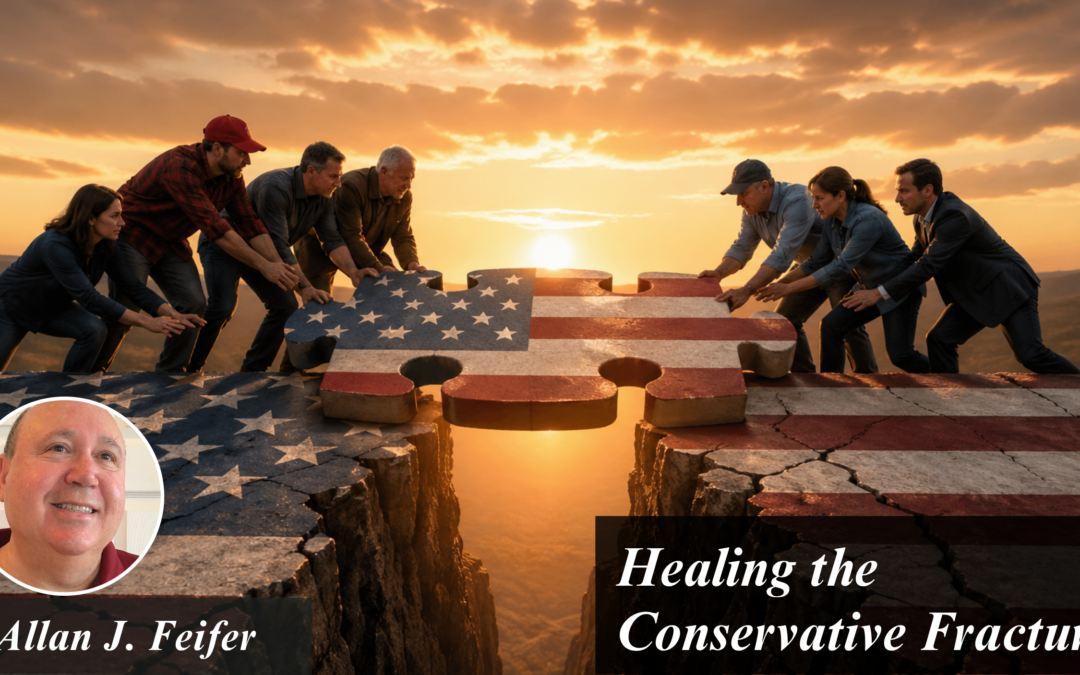
America’s declining faith in constitutional and religious institutions threatens our Republic. Republicans lack cohesion, as we witness Democrats rapidly transition into socialism, if not outright communism. With prediction markets indicating a Democratic sweep, policy failures remain starkly evident—immigration, spending, corruption, and foreign influence. Inviting punishment, or at the very least disinterest, from voters. Only bold, popular reforms (housing, usury caps, prosecutions, trust restoration) and aggressive executive action to mobilize voters will forestall catastrophic consequences if Democrats win control of both chambers.
Americans are lost in the wilderness, many having lost (if they ever learned it in the first place) an understanding of how perfect our Constitution is and its connection to God. John Adams wrote:
“Our Constitution was made only for a moral and religious people. It is wholly inadequate to the government of any other.”
Losing control of both the House and the Senate in this year’s midterms would be a political and moral Armageddon for the country. Prediction markets have been impressively accurate in predicting political outcomes. At the moment, Prediction markets give the odds of a Democratic sweep (Democrats winning both the House and the Senate) roughly 51–53%.
Don’t believe me as to how radical they’ve become? Just the other day, 37 or 40 (depending on how the issue was phrased) voted to deny Israel defensive weapons in a trend that’s been building since the October 7th massacre by Hamas. Dozens of House Democrats and some senators have publicly urged the removal of the President via impeachment or the 25th Amendment. Dems are chomping at the bit; they’re not hiding it!
Meanwhile, in the Senate, A sizable group of Senate Democrats has repeatedly filed and forced votes on War Powers resolutions to end U.S. military action related to Iran, becoming the de facto pro-Iran block. And, it does not end there: for 250 years, we’ve had the Electoral College to protect us against single-party rule. Democrats just secured the 18th state’s vote to abolish the College.
Democrats, except for a couple in particularly vulnerable Senate races, voted against the SAVE Act. Worse, three Republicans, Murkowski, Thune, and McConnell, are likely no votes.
I think we have to believe our eyes: Republicans themselves are to blame for the predicament they find themselves in, with no answer to the driving factor…TDS. We must strike a new way forward with what little time remains.
Anger Without Action?
Instead of imploring Republicans to turn out for the midterms (which they historically won’t), what to do? Ask any motivated conservative, and they’ll quickly come back with a litany of unaccomplished tasks that they’re livid about and seek to punish someone for:
- Deporting illegal aliens. Not for wont of trying, but a combination of the courts’ impeding removals at the state and national level, plus an inability to effectively communicate to the public the scope and cost of illegal immigration, has slowed removals to an unacceptably low number, swaying public opinion.
- Sanctuary cities/states are blatantly unconstitutional because they don’t just “decline to cooperate” — they actively erect political barricades against federal law, daring Washington to enforce immigration statutes that the Constitution clearly places under federal authority, nullifying laws they don’t like, substituting ideological posturing vs. upholding the law, daring courts to call their bluff. The Supremacy Clause is clear: states have crossed the line into defiance, opening them to violations of several federal statutes. Where are the challenges?
- Conservatives have talked a big game about fiscal discipline for decades. Yet, once in power, they repeatedly buckle, passing bloated budgets, omnibus monstrosities, and debt-ballooning deals that look indistinguishable from the spending habits they campaigned against. Voters notice.
- Republicans fail to confront institutional corruption inside the federal bureaucracy, choosing hearings and sound bites over structural reform. Leadership rails against politicized agencies on the campaign trail but shrinks from the actual work of dismantling entrenched power once in office, allowing the same unaccountable institutions to grow more aggressive, more insulated, and more hostile to oversight.
Republicans must do something tremendously popular and unexpected if we are to have any chance to win the midterms. They must not simply try; they must deliver on at least some of the primary issues that voters sent the President and other GOP leaders to fix.
Trump must defy the courts on clear-cut issues like immigration, fraud, and inefficiency throughout government, pushing issues to the Supreme Court. Here are four things that would shake up the American landscape and bring Republicans back to the polls this November:
- The average age of a first-time homebuyer is now 40. Homeownership is the most important aspect of “belonging” to the middle class. Make it much easier for first-time buyers by having the government buy down mortgage rates to 3% and freeing up public lands for homebuilders to build on. Issue an EO that clears the way for fast land entitlement and bars all non-essential costs and fees.
- A national usury law capping interest rates at prime plus five is the only way to break the cycle of predatory lending that traps vulnerable borrowers in perpetual debt. If some high-risk applicants lose access to credit as a result, that’s a necessary correction — not a flaw — because a financial product that exists only at confiscatory interest rates isn’t “credit” at all; it’s exploitation. A strict national cap would force lenders to operate within the bounds of fairness, push bad actors out of the market, and restore the idea that lending should be a path to stability, not a business model preying on desperation.
- People want to see corrupt people at the top go to jail. It’s a necessary requirement for years of corruption in government, especially by NGOs and other agencies that perpetuate insider dealing.
- Address the reality that people are unhappy and don’t trust leadership to deliver. Talk about it, create paths to reform for basic issues that are patently unfair. Communicate with the American people on their level and on the issues that matter to them.
Conlcusion:-
People want to see action, not words. My hand to God, if we lose both houses, the Democrats will kill the filibuster, create two new states, impeach Trump, and lead our country into ruin. Are we going to sit on our hands and let it happen?
The open season mindset poisoning America
Day of the Jackal was one of my favorite movies. The Jackal was a meticulous, anonymous assassin known only as “The Jackal” hired to kill the French President, triggering an intense manhunt as he methodically advanced toward his target. The almost inevitability of the Jackal murdering his target pretty much kept you on the edge of your seat.
Cole Allen is no Jackal. Nor were Thomas Crooks or Ryan Routh, plus a host of other low-lifes who had mental problems and attempted entry at Trump Tower, Mar-a-Lago, Trump National Doral, and the Trump International Hotel (DC), some with guns and murderous intent, but no real plan. What does all this mean?
There are moments in history when the guardrails of political life feel as if they’ve been kicked loose, when the normal restraints that keep fringe actors on the sidelines suddenly fail, and when individuals who once would have remained invisible decide that the way to matter is through violence.
America is living through such a moment now. It has become, in effect, open season—not in the cartoonish, slapstick sense of the animated film where hunters chase a bewildered bear through the woods, but in the darker, more literal sense of a political climate where the presidency itself has become a target for people seeking relevance, validation, or a sense of purpose.
There is no modern corollary to the number of individuals who have tried to insert themselves into the political process through force, up to and including attempts on a sitting president. While only one incident meets the formal definition of an assassination attempt, the broader pattern is unmistakable: a steady stream of threats, breaches, and violent disruptions that reveal a deeper sickness in the political culture.
What makes this era different is not simply the presence of a polarizing figure in the Oval Office, but the environment in which political identity now operates. Previous presidents provoked intense fear, anger, and even hatred, yet the public did not see the same level of activation among fringe individuals.
Today, however, people are reacting inside a system engineered for constant stimulation, outrage, and identity-level conflict. Social media accelerates grievance, isolates people into ideological silos, and rewards the most extreme expressions with attention.
Institutions that once absorbed or moderated public emotion are now widely distrusted, leaving some individuals convinced that only direct action—even reckless or symbolic—can make them visible. Add to that a 24-hour news cycle, collapsing civic norms, and a culture that treats politics as existential rather than procedural, and you get a landscape where far more people become activated, destabilized, or convinced that dramatic intervention is justified.
In this environment, the metaphor of open season becomes more than rhetorical. It describes a psychological shift: the sense among certain individuals that the usual boundaries no longer apply, that the target is exposed, and that taking a shot—literal or symbolic—will be rewarded with attention, validation, or a sense of moral righteousness. The presidency becomes the bear in the clearing, surrounded not by hunters with licenses but by amateurs, opportunists, and unstable actors who believe the moment has given them permission.
Progressive Leaders Under Fire:-
Many commentators argue that certain political forces on the left—including some elected officials, activist networks, and media ecosystems—have contributed to this climate by promoting a sense of moral entitlement that resonates strongly with individuals already on the margins. When political rhetoric frames opposition as illegitimate, oppressive, or dangerous, and when disruptive tactics are celebrated as righteous forms of “resistance,” fringe actors can interpret that as permission to escalate.
In this view, a steady narrative of grievance, emergency, and moral absolution lowers the psychological barriers that would normally keep unstable or impulsive individuals from inserting themselves into politics through confrontation or spectacle. The result is not necessarily that mainstream leaders intend violence (though I believe some do), but that their language and posture can unintentionally activate people who otherwise would have remained isolated, passive, or politically disengaged.
This dynamic is intensified by the way political narratives are constructed and amplified. When a political movement repeatedly signals that its goals are morally superior and that its opponents threaten democracy, public safety, or basic human rights, it creates a psychological environment in which extreme actions can feel justified.
For individuals already predisposed to instability or grievance, this becomes a form of moral licensing: the belief that extraordinary circumstances require extraordinary measures. The more political actors frame the moment as a crisis, the more likely fringe individuals are to interpret it as a personal call to action.
Some analysts further argue that the current wave of political violence, far from undermining the left, reinforces a narrative that benefits them strategically. Each new incident becomes another data point used to portray Trump as uniquely dangerous or destabilizing, and the violence itself becomes political fuel—a way to keep their base in a constant state of emotional activation.
The more chaos that surrounds him, the easier it becomes to argue that he is the source of it, and the more effectively they can dampen his ability to communicate, govern, or shape the national conversation. In a tight midterm environment, this constant drumbeat of alarm can help shift marginal voters, suppress enthusiasm among the undecided, and create an atmosphere in which the left’s preferred narrative dominates through sheer repetition and emotional intensity.
The result is a political landscape that feels increasingly like open season—a moment when the normal protections of civic life seem weakened, when the presidency appears exposed, and when individuals on the fringe feel unusually emboldened. The danger is not only the violence itself, but the way it reshapes public perception, hardens political identities, and distorts the democratic process. In this environment, the line between political participation and political disruption becomes increasingly blurred, and the consequences for national stability grow more severe.
God Bless America!
 Allan J. Feifer—Patriot
Author, Businessman, Thinker, and Strategist. Read more about Allan, his background, and his ideas to create a better tomorrow at www.1plus1equals2.com. Read additional great writers here.

Recent Comments