
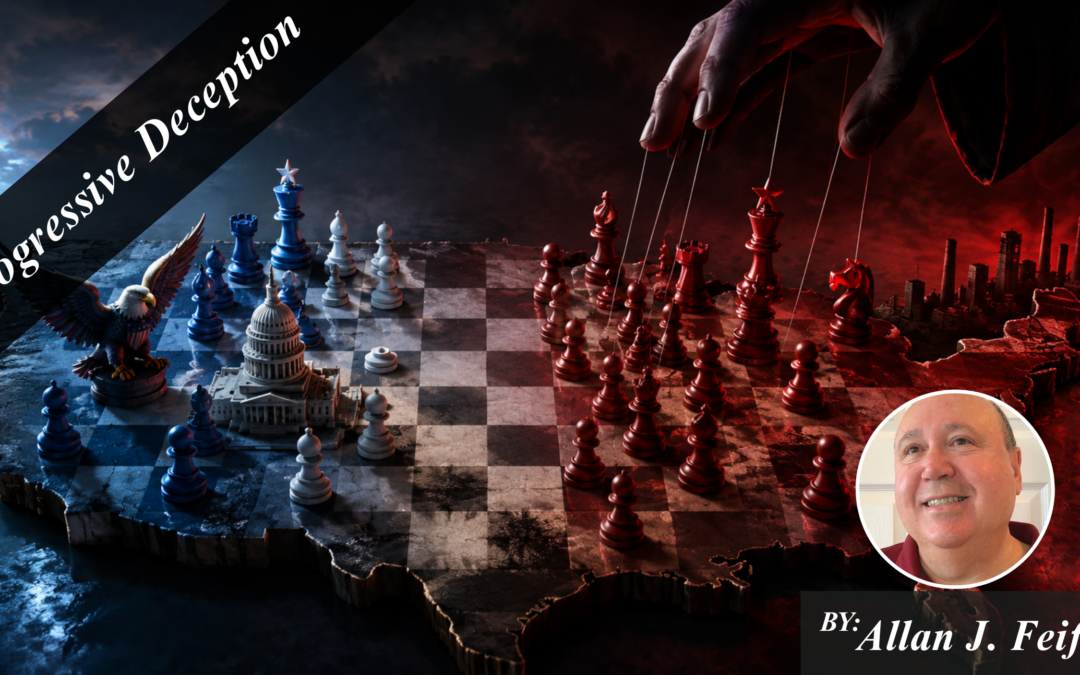
Believe me when I say there is nothing new under the Sun. However, mankind’s ability to forget the unforgettable is limitless. We are doomed to repeat our worst mistakes, continually suckered into the same old blunders we’ve paid dearly for time and time again.
Sun Tzu is one of my favorite historical figures, who taught that the essence of strategy is not brute force but the manipulation of an opponent’s perceptions until he can no longer distinguish reality from the image you project. In The Art of War, Sun Tzu makes the case that “all warfare is based on deception,” meaning the ultimately superior commander wins by shaping what an enemy believes—classically, appearing weak when strong, distant when near, divided when unified, and passive when preparing to strike. The goal is simple: control an adversary’s decision-making by controlling the information environment, forcing him to react to phantom illusions rather than facts. For Sun Tzu, deception is not an optional tactic before conflict; it prepares the ground decisively before the commencement of hostilities.
Modern Politics Shifts:-
In today’s political world, we can starkly see how some groups have adopted this same methodology, doing away with persuasion while focusing on constructing narratives that dissuade dissent and make those challenging narratives appear out of touch at best, or dangerous, outdated, or morally corrupt. All in service to marginalizing anyone who dares challenge the popular new status quo. Deception tactics, including misdirection and continually evolving false narratives, gain their power not through the clarity of their ideas but by controlling the framing—to present their agenda as inevitable, their opponents as evil, archaic, or self-serving, and as standing in the way of an inevitable moral evolution. Deceptive strategies advance by managing public consciousness, redefining language, elevating their”truth” to unquestionable status, and dismissing competing viewpoints as disinformation or bad faith. The aim is not merely to win arguments but to control or even destroy your opponents while empowering their supporters. Eventually, the mental environment they create makes the desired conclusions feel natural, even preordained. Their side wants you to love them, not to fear them.
Oh—you thought I was talking about progressives. Many people do, because the methods sound familiar.
But what I’m actually describing is a much older and far more diabolical doctrine—one that openly taught that political victory comes not from debate but from capturing the institutions that shape public consciousness, even if, especially if, being “persuaded” means at the point of a gun. State power ultimately gives them the ability to take everything away from you, up to and even including your very life. It insists that language must be reengineered to serve the movement, that cultural organs must serve a consensus that manufactures universal consent while ostracizing dissent, and that opponents must be delegitimized not through argument but through moral indictment. It holds that the path to power runs through controlling narratives, co-opting emotions, and engineering the “correct” social awareness, long before policy is even discussed, if it is discussed at all. This worldview treats perception as the real battlefield and the public mind as territory to be seized and reorganized.
Oh—you thought I was still talking about progressives. That confusion is precisely my point. What we used to call Marxism has simply been rebranded as progressivism, with the methods intact and the vocabulary updated. Millions have been hoodwinked due to the continual atrophy of our critical thinking skills and a constant and consistent narrative that America is illegitimate in all the ways that matter, forcing shallow minds into the arms of our enemies.
To see how the confusion arose, let’s visualize Progressivism and Marxism side by side. The parallels are not superficial but intentionally structural—fixed in how each construct employs power, culture, language, and legitimacy to achieve its intended outcome—control over you. The overlap becomes clearer when examined category by category:
Comparison Table |
||||||||||||||||||||||||||||||||||||||||||||
Progressivism Critics’ Description) vs. Modern Marxism Doctrine
|
When you examine this chart, the tight connectivity between the two isms becomes impossible to ignore. Sun Tzu described deception as the operating system of conflict: shape perception, and you shape reality. Modern progressive theory trods the same ground—narrative dominance, moral framing, linguistic redefinition, and the management of public consciousness, never allowing an actual debate on the merits. Marxism has built its entire theory of political change on precisely these levers:
- Capture the culture
- Command the language
- The rest follows almost by default.
The labels certainly differ, the rhetoric may appear to be less strident, and the tactics may be updated for a digital age. Still, the strategic DNA remains strikingly similar. The real surprise isn’t that these methods overlap; it’s that it’s not obvious. Again, in the same vein as young people preferring socialism over capitalism, it’s a stark reminder of how uneducated educated people are today.
Conclusion:-
And if the methods look identical, that’s because the ideology didn’t disappear — it just changed the label on the bottle.
God Bless America!
 Allan J. Feifer—Patriot
Author, Businessman, Thinker, and Strategist. Read more about Allan, his background, and his ideas to create a better tomorrow at www.1plus1equals2.com. Read additional great writers here.

Recent Comments